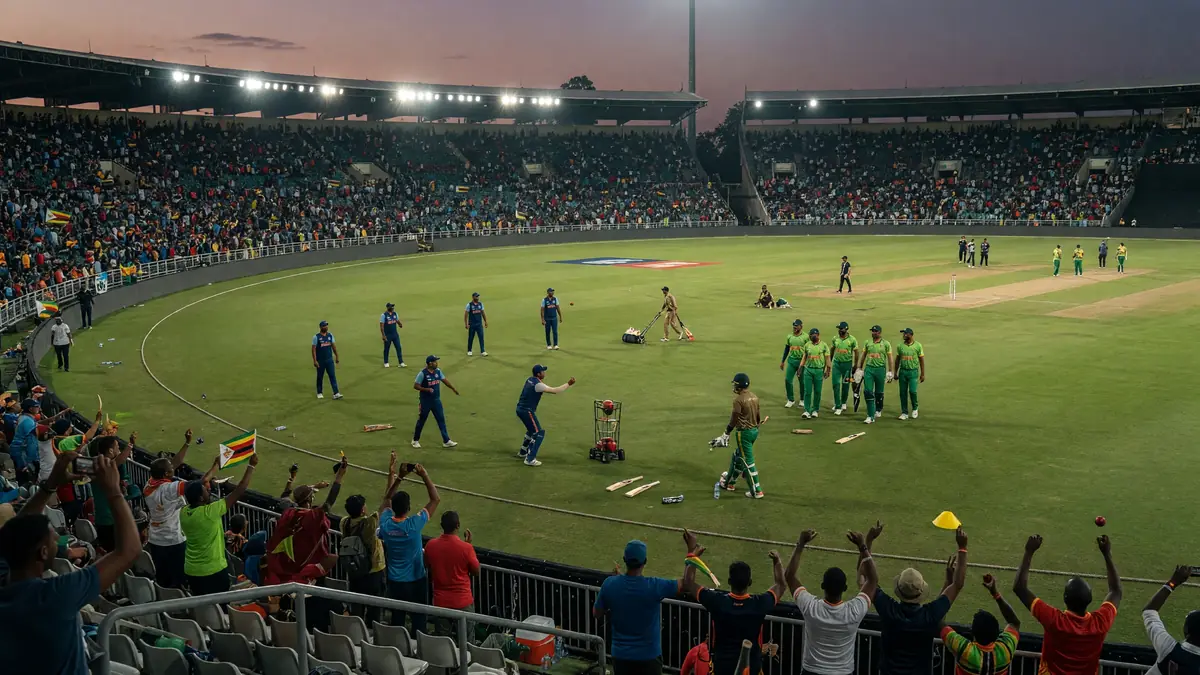
ZIM vs IND Dream11 Prediction 1st T20I: Harare Captain Calls
India open a three-match T20I tour of Zimbabwe at Harare Sports Club on Thursday, 23 July 2026, with fantasy locks at 4:30 PM IST. Captain and vice-captain choice sits on role certainty, not reputation.
Zimbabwe host India in the opening T20I of a three-match home series at Harare Sports Club. According to Cricket Winner’s preview, the start time for Indian fantasy locks is 4:30 PM IST, with live streaming listed on FanCode. The editorial desk treats that lock time as fixed until an official board notice says otherwise.
The same preview places India on a six-match losing streak heading into Harare, after a 2–0 reverse in Ireland and a 4–0 whitewash in England. That is six consecutive losses across those two tours — the only losing-run figure used below. Zimbabwe arrive after winning an ODI series against Bangladesh and dropping the T20I leg 2–1. Head-to-head across the last seven meetings still leans India, six wins to one, on the preview’s table. Form and history set context; they do not by themselves choose a Dream11 armband.
What follows is a Sports Real captain-allocation read for a free-to-play ZIM vs IND Dream11 prediction card. Probable XIs, pitch splits, weather notes, named captain bands and the match lean are taken only from that Cricket Winner preview. Build order, variance framing and pre-lock checks are original analysis. No player career totals, recent-run tallies or sample elevens outside that published framing are invented here.
Why Thursday’s clock matters more than yesterday’s table
A 4:30 PM IST start leaves a short afternoon for final XI graphics. Managers who freeze captains at lunch often pay for a batting-order float that lands after 3 PM. The practical rule for this fixture is simple: lock the eleven structure early if you must, but leave captain and vice-captain open until both team sheets and the toss are public.
Weather noise looks low on the preview’s Harare line — temperature in the mid-20s Celsius, rain chance listed at 0%, humidity near 28%. That removes most delay-driven late swaps. It does not remove role risk. A clear sky still allows a last-minute bowling change or a wicketkeeper batting drop that wrecks a 2x tag.
Series shape also matters. This is match one of three. A safe small-league card can lean toward proven dual-path names. A multi-entry grand-league set should still leave room for home differentials, because even a favoured touring side can drop the opener and force ownership chaos for the next two games.
Small-league floor versus grand-league separation
Cricket Winner’s free-to-play suggestions name two distinct armband pairs. The grand-league shape captains Abhishek Sharma with Sikandar Raza as vice-captain. The small-league shape captains Ishan Kishan with Brian Bennett as vice-captain. Those pairs answer different questions. One hunts separation when public ownership piles onto India batters. The other protects floor when a single cash entry cannot survive a quiet top order.
Do not treat the two published pairs as a shopping list to merge into one overloaded card. In a single small-league entry, pick one spine and build around it. In a ten-entry grand-league set, spend most cards on the Sharma/Raza spine and reserve one or two for a Bennett-led home tilt against heavy India ownership.
Vice-captain discipline is the quiet edge. A 1.5x on Raza when he keeps a full bowling quota and bats through the middle often beats a fashionable 2x on a batter who faces fewer than ten balls. Place the armband only after you know who still owns two routes to a solid points night.
Harare’s balanced deck and armband risk
The preview describes Harare Sports Club as a surface that lets batters and bowlers both work. Pace can find bounce and carry. Finger spin stays useful through the middle overs when boundaries are larger. Published outcome splits are nearly even: wins batting first 47%, bowling first 53%, with spin listed as the better-suited discipline at 55%. Average first-innings score sits near 155; second innings near 137.
For fantasy builds, that profile punishes pure slogger stacks and rewards multi-skill credits. An all-rounder who bats inside the top six and bowls middle overs collects two independent paths to double-digit returns. A specialist batter who faces a short stay after a collapse does not. Death overs still matter on a 155-par deck, but so do the two change-up overs a part-time seamer or wrist spinner might steal when the captain wants a break in pace.
The 18-run gap between first- and second-innings averages also frames chase volatility. If India defend, Zimbabwe’s middle order — especially Sikandar Raza and Ryan Burl on the probable sheet — become dual-path upside. If Zimbabwe set a total, India’s left-hand power options and leg-side hitters gain more value than pure accumulators. Lock captains after you know who is batting when, not only who sits on a multi-match form strip.
Where the touring sheet actually pays
Cricket Winner’s probable India XI reads: Vaibhav Sooryavanshi, Abhishek Sharma, Shreyas Iyer, Ishan Kishan (wk), Shivam Dube, Suryansh Shedge, Rinku Singh, Tilak Varma, Prince Yadav, Mayank Yadav, Ravi Bishnoi. Treat that as a pre-match projection, not a confirmed board. The shape is batting-deep, with two pace names and a wrist-spin option through the middle phase, while the side still searches for a clean win after the six-match losing streak noted above.
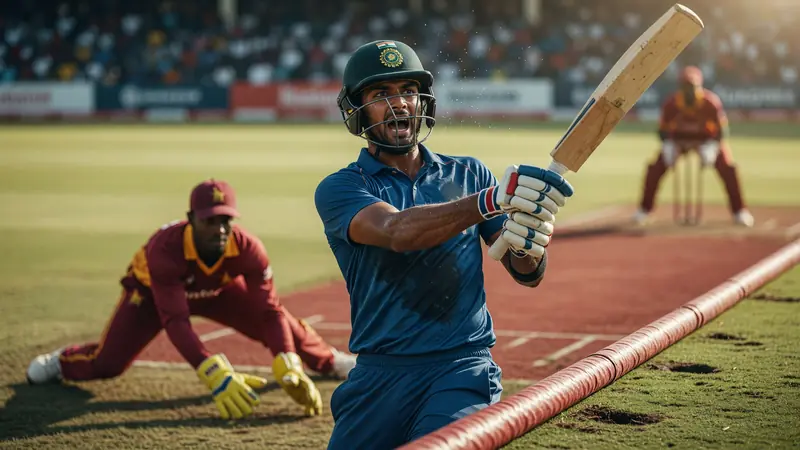
Abhishek Sharma is the cleanest small-to-mid ownership captain default among the listed Indian batters when he keeps a new-ball slot. On a surface with bounce, early-boundary intent remains the primary 2x path. Vaibhav Sooryavanshi is the higher-variance partner at the top: useful as a core batter in India-leaning elevens, less stable as the sole captain unless the team sheet confirms he opens and faces the first three overs.
Ishan Kishan’s dual credit as wicketkeeper-batter keeps him inside every serious shortlist. The preview’s small-league suggestion even hands him the captain armband. That only holds if he stays in the top four. A float to five or six after a late shuffle collapses the batting ceiling and leaves you paying keeper premium for glove work alone. Shreyas Iyer belongs in the punt-band batter group rather than as an auto-captain — higher ownership risk in grand leagues if he becomes the “safe” India name everyone reaches for after quiet tours.
Bowling credits on the projected sheet tilt toward Prince Yadav and Mayank Yadav for pace, with Ravi Bishnoi as the spin pivot when the middle overs slow. A bowling vice-captain on either pacer is a grand-league tool, not a default cash staple: if the new ball bites, either can outscore a middle-order batter; if Zimbabwe’s openers leave well for six overs, the 1.5x returns very little. Shivam Dube sits in the all-rounder band as salary-efficient glue more than a captain magnet, unless the sheet locks him for a full bowling quota and a top-six bat.
Home roles that still pay against the narrative
Probable Zimbabwe XI in the same preview: Brian Bennett, Tadiwanashe Marumani (wk), Dion Myers, Sikandar Raza (c), Ryan Burl, Milton Shumba, Clive Madande, Brad Evans, Richard Ngarava, Blessing Muzarabani, Newman Nyamhuri. Real-side captaincy sits with Raza, which is useful fantasy information: he is more likely to bowl when the match needs a brake and to bat through the middle rather than farm strike downward.
Primary home stack
Sikandar Raza, Brian Bennett, Ryan Burl, and one of Ngarava or Muzarabani. That four-man block covers openers, dual-path all-rounders and a new-ball or change-up seamer without handing eleven credits to the underdog.
Secondary punches
Marumani for glove plus top-order bat, Brad Evans if confirmed as a bowling all-rounder, and Newman Nyamhuri only when the team sheet locks him as a full four-over option rather than a late-cut specialist.
Brian Bennett appears both as a captain candidate in broader discussion and as vice-captain in the preview’s small-league suggestion. On home decks he is the Zimbabwe batter most likely to face enough balls to justify a multiplier when grand-league managers fade the India narrative. Sikandar Raza stays in nearly every balanced eleven because dual paths survive quiet batting nights if the bowling overs remain.
Blessing Muzarabani and Richard Ngarava are the seam pair managers should reconcile against the final sheet before paying for two home pacers. Fantasy cards that want a 7–4 or 6–5 India lean still need at least one of those two if the toss hands Zimbabwe the ball under clear skies. Ryan Burl remains the left-hand spinning all-rounder who thrives when India slow the middle overs — a classic Harare middle-overs differential rather than a toss-up captain.
A sequence that does not copy a screenshot
Public graphics travel fast on match day. Cloning them produces identical ownership and thin rank separation. A cleaner sequence for this Harare opener:
- Lock one India top-three batter with a confirmed new-ball or first-drop role.
- Lock Sikandar Raza while his bat-and-ball dual path is intact on the sheet.
- Lock one of Muzarabani or Ngarava, not both, unless you are deliberately building a home-tilt grand-league card.
- Fill the keeper from Kishan unless Marumani’s batting slot is confirmed higher and you need a differential glove.
- Spend remaining credits on either a second India pacer or Burl, depending on toss and middle-overs matchups.
- Only then place captain and vice-captain using the two published spines above.
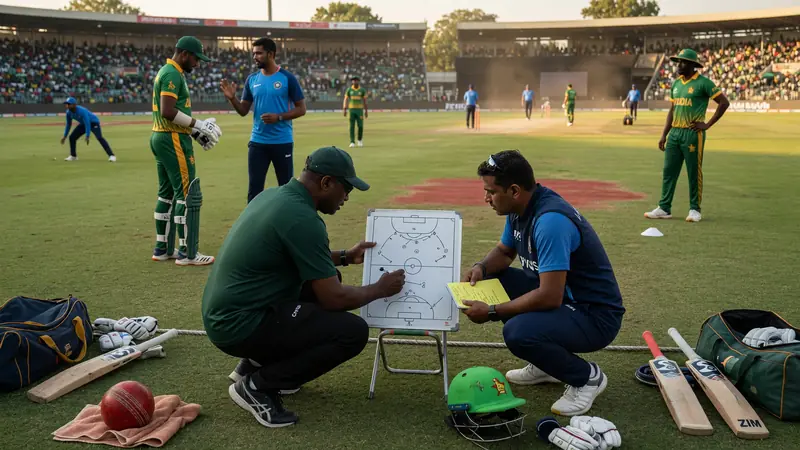
Combination hygiene beats stacking five pure batters on a deck where spin suitability is listed near 55%. A practical band is one wicketkeeper, three to four batters, two to three all-rounders and three to four bowlers. Exact salary math depends on the platform list, but the principle is stable: unused bowling credits are a common way to finish mid-table on a balanced Harare night.
For broader role frameworks beyond this single fixture, explore the desk’s ongoing Fantasy Cricket coverage.
India favoured to open 1–0 — with multi-entry caveats
Despite the six-match losing streak, Cricket Winner’s published match lean still favours India to win and take a 1–0 series lead. The same note warns the contest is unlikely to be one-sided given Zimbabwe’s recent home work against Bangladesh. Fantasy translation: overweight India batters and one India pacer in cash games; keep two or three Zimbabwe dual-path players in every grand-league card so a competitive 20-over arm-wrestle does not erase the ticket.
None of this guarantees points, rankings or cash returns. Team sheets can change inside the final hour. A late shuffle that drops Sooryavanshi, floats Kishan or rests Muzarabani invalidates half the role logic above. Wait for the toss graphic, confirm overs for Prince Yadav and Mayank Yadav, and only then freeze captains.
Fixture timing, streaming listing, weather line, form context (including India’s six-match losing streak after Ireland 2–0 and England 4–0), head-to-head, pitch splits, probable XIs, named captain/vice-captain pairs and the India-to-win lean are taken from Cricket Winner’s ZIM vs IND 1st T20I Dream11 preview (published 23 July 2026). Build order and variance framing are original to Sports Real. Content is for informational and free-to-play fantasy discussion only. Player selection and platform rules can change without notice.
Pre-lock checklist for the 4:30 PM IST start
- Confirm both XIs against the on-ground board, especially any keeper batting float and India’s exact bowling three.
- If India bat first, prefer Abhishek Sharma (C) with Raza as the primary vice-captain route.
- If Zimbabwe bat first on a used afternoon surface, upgrade Bennett and Burl before adding a third India middle-order batter.
- Keep combination near one wicketkeeper, three to four batters, two to three all-rounders and three to four bowlers rather than a five-batter pile on a spin-friendly middle phase.
- Do not chase ownership screenshots in the last five minutes; chase role confirmation.
The series does not end on Thursday. After this opener, two further T20Is remain on the India tour of Zimbabwe 2026 itinerary. Thursday’s armband data — who faced the new ball, who bowled the death overs, whether Raza kept a full quota — should feed later edits more than any pre-series reputation chart. Bank the evidence from Harare’s first night, then rebuild rather than cloning the same eleven twice.
What would force a full rebuild
Three concrete triggers justify discarding these defaults: a confirmed India batting-order reshuffle that pushes Abhishek out of the top three; a Zimbabwe decision to rest Muzarabani or Ngarava; or a pitch report on match morning that abandons the balanced 155-par expectation for a slow turner below 140. Any one of those three moves the captain band away from the Sharma/Kishan spine and toward bowling multipliers or pure home stacks.
Credits and salary hygiene
Younger India pace and uncapped batting names often sit cheaper than established bilateral regulars on fantasy lists. Spend savings on Raza rather than a fourth specialist batter who bats at seven. If salary pressure forces a choice between Dube and Burl, pick the player with the surer bowling overs on the team sheet. Quiet middle overs punish unused bowling credits more than they punish a missing fifth pure batter.
Ownership traps to avoid
Auto-captaining Shreyas Iyer because he is the most familiar India name is the main trap on this card. So is stacking four India middle-order batters while leaving Raza off a grand-league entry. A third trap is paying premium for two Zimbabwe pacers when only one will see the new ball. Pick the role, not the jersey count.
ZIM vs IND 1st T20I fantasy questions
When does the 1st T20I start for Indian fantasy locks?
Thursday, 23 July 2026, 4:30 PM IST at Harare Sports Club. Live streaming is listed on FanCode in the Cricket Winner preview.
Who are the standout captain options named in the preview?
Grand league: Abhishek Sharma (C) with Sikandar Raza (VC). Small league: Ishan Kishan (C) with Brian Bennett (VC). Those are the only named captain/vice-captain pairs carried forward here.
What pitch numbers should managers respect at Harare?
Roughly 155 average first innings, 137 second innings, 47/53 bat-first versus bowl-first win split, and spin suitability near 55% on the published notes.
Is India still favoured despite the losing streak?
Yes. The preview still tips India to win and lead the series 1–0 after a six-match losing streak, while warning Zimbabwe can keep the contest competitive.
How many Zimbabwe players belong in a balanced eleven?
Three to four is the practical band for grand leagues: Raza almost always, one seamer from Muzarabani/Ngarava, plus Bennett or Burl depending on toss and batting order.
What weather assumption is baked into late swaps?
The preview’s Harare line lists roughly 25–27°C, 0% rain chance and humidity near 28%. Plan for a full game unless an official update changes that.